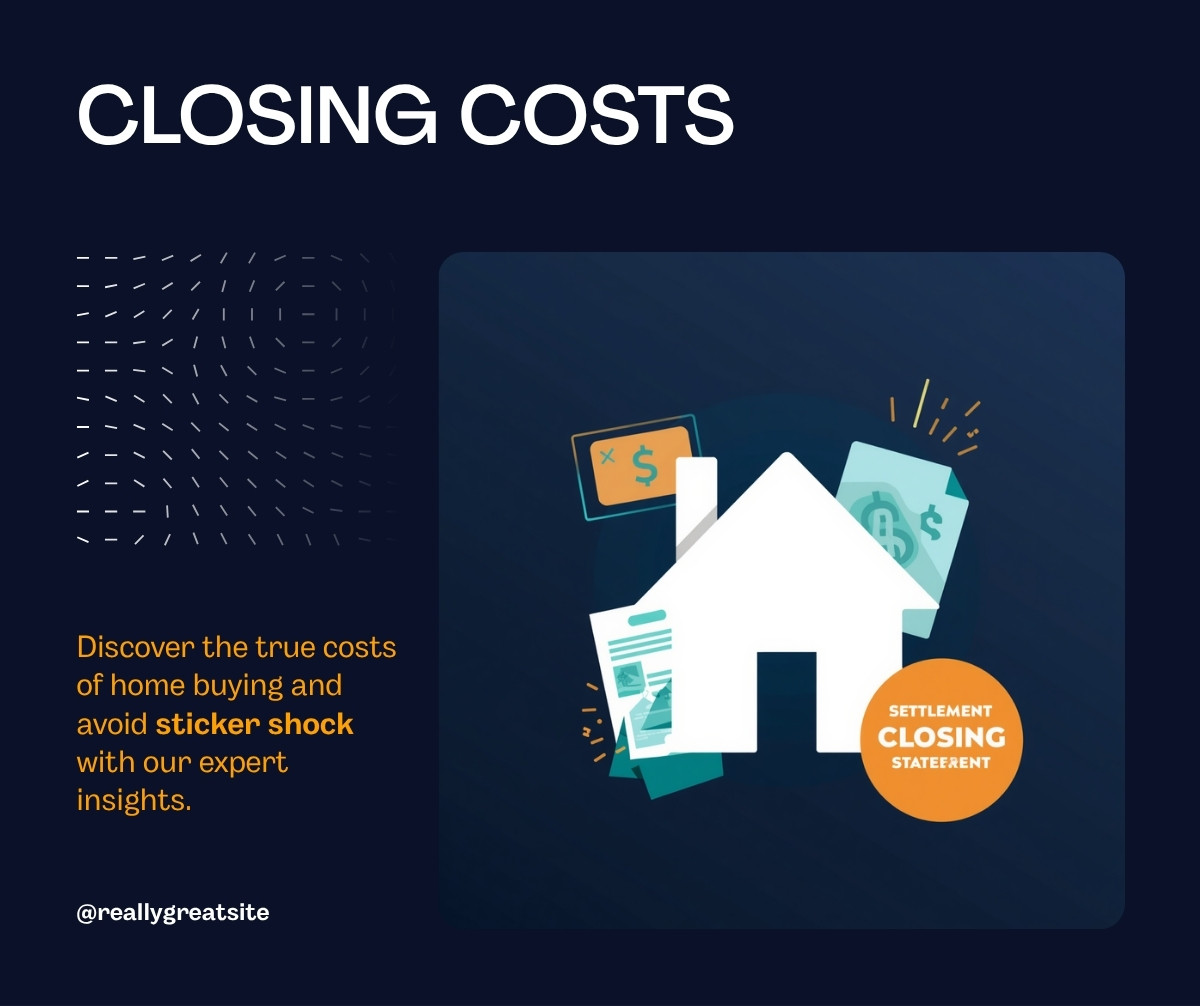
Key Takeaways
- Real closing costs average 5-6% of home price, not the 2-3% most buyers expect
- Forgetting prepaid items costs buyers an extra $3,000-8,000 in surprise expenses
- Calculate lender fees + third-party services + prepaids + taxes = true closing cost
- Tool: Calculate your exact closing costs →
Get Pre-Approved TodaySPONSORED
Lock your rate before it moves. Rocket Mortgage pre-approval takes under 10 minutes.
I learned this the hard way. Walked into my first closing with $8,000 budgeted for closing costs on a $280,000 house. Walked out having paid $14,200. The loan estimate said one thing. Reality hit different.
Most buyers make the same mistake. They focus on the obvious fees and forget the sneaky ones that add up fast.
The Real Closing Cost Breakdown
Closing costs fall into four buckets. Miss any bucket and you'll get surprised.
Bucket 1: Lender Fees (0.5-1% of loan amount)
These fees go straight to your mortgage company:
- Origination fee: 0.5-1% of loan amount ($1,500-3,000 on a $300k loan)
- Underwriting fee: $300-800
- Processing fee: $200-500
- Document prep: $100-300
Your lender controls these fees. Shop around. One lender quoted me $2,800 in fees. Another charged $1,200 for the same loan.
Bucket 2: Third-Party Services (1-2% of home price)
You need these services, but you can shop for better prices:
- Appraisal: $400-800
- Home inspection: $300-600
- Title insurance: 0.5-1% of home price
- Attorney fees: $500-1,500 (required in some states)
- Survey: $300-700
- Pest inspection: $100-300
Title insurance hits hardest. On a $400,000 house, expect $2,000-4,000 just for title insurance.
Bucket 3: Prepaid Items (The Surprise Factor)
This bucket destroys budgets. Lenders collect money upfront for expenses you'll owe later:
- Property taxes: 2-6 months upfront
- Homeowners insurance: First year premium
- PMI: First month upfront
- Escrow account funding: 2-3 months of taxes and insurance
Real example: $350,000 house in Texas. Property taxes run $7,000/year. Insurance costs $1,800/year. PMI adds $200/month.
Prepaid calculation:
- Property taxes (3 months): $1,750
- Insurance (1 year): $1,800
- PMI (1 month): $200
- Escrow funding: $2,200
- Total prepaids: $5,950
That's before any lender or service fees.
Bucket 4: Government Fees and Taxes
Uncle Sam and local governments want their cut:
- Recording fees: $50-500
- Transfer taxes: 0.1-2% of home price (varies by location)
- HOA fees: First month or quarter upfront
Transfer taxes hurt in expensive areas. New York charges 1.825% on homes over $500,000. That's $9,125 extra on a $500,000 house.
Worked Example 1: $300,000 House Purchase
Let me walk through real numbers for a $300,000 house with 20% down ($60,000). Loan amount: $240,000.
Lender Fees:
- Origination (0.75%): $1,800
- Underwriting: $500
- Processing: $300
- Document prep: $200
- Subtotal: $2,800
Third-Party Services:
- Appraisal: $550
- Inspection: $450
- Title insurance: $2,100
- Attorney: $800
- Survey: $400
- Subtotal: $4,300
Prepaid Items:
- Property taxes (3 months): $1,200
- Insurance (1 year): $1,500
- Escrow funding: $1,800
- Subtotal: $4,500
Government Fees:
- Recording: $150
- Transfer tax: $600
- Subtotal: $750
Total Closing Costs: $12,350
That's 4.1% of the home price. Way higher than the 2-3% most people budget.
Worked Example 2: $500,000 House Purchase
Higher-priced homes get hit harder with percentage-based fees.
$500,000 house, 20% down ($100,000), loan amount $400,000:
Lender Fees:
- Origination (1%): $4,000
- Other fees: $1,000
- Subtotal: $5,000
Third-Party Services:
- Title insurance: $3,500
- Other services: $2,000
- Subtotal: $5,500
Prepaid Items:
- Property taxes (4 months): $3,333
- Insurance: $2,500
- Escrow funding: $2,917
- Subtotal: $8,750
Government Fees:
- Transfer tax (1%): $5,000
- Other fees: $300
- Subtotal: $5,300
Total Closing Costs: $24,550
That's 4.9% of the home price. Nearly $25,000 just to close.
How to Calculate Your Exact Closing Costs
Follow this step-by-step process:
Step 1: Get Loan Estimates from 3 Lenders
Don't trust online calculators for lender fees. Get real loan estimates. Compare:
- Origination fees
- Processing fees
- Underwriting costs
- Third-party service estimates
Step 2: Research Local Service Costs
Call providers directly:
- Title companies (get quotes from 3)
- Home inspectors
- Attorneys (if required)
- Surveyors
Prices vary wildly. I've seen title insurance quotes differ by $1,500 for the same property.
Step 3: Calculate Prepaid Items Precisely
This requires detective work:
Property Taxes: Check county assessor website for current tax rate. Multiply by home price. Divide by 12 for monthly amount. Multiply by months you'll prepay (usually 2-6 months).
Insurance: Get actual quotes from insurance companies. Don't estimate.
Escrow Funding: Lenders typically want 2-3 months of taxes and insurance in reserve.
Step 4: Research Government Fees
Check your county recorder and state tax authority websites. Transfer taxes vary dramatically by location.
Step 5: Add Everything Up
Don't round down. Add a 10% buffer for surprises.
Regional Cost Variations That Matter
Closing costs vary dramatically by state and county.
Low-cost states (total costs 2-4% of home price):
- Missouri
- Indiana
- North Dakota
High-cost states (total costs 5-7% of home price):
- New York (high transfer taxes)
- California (expensive services)
- Hawaii (everything costs more)
Killer fees by region:
- NYC: Mansion tax adds 1-3.9% on homes over $1 million
- California: Transfer taxes up to 1.5% in some counties
- Florida: No state income tax, but documentary stamps add costs
Common Closing Cost Mistakes That Cost Money
Mistake 1: Not Shopping for Services
I see buyers accept the first title company quote. Shop around. Title insurance on my $380,000 house ranged from $2,100 to $3,800 between companies.
Mistake 2: Forgetting About Timing
Close at month-end? You'll prepay less in daily interest charges. Close at month-beginning? You'll pay nearly a full month of interest upfront.
Mistake 3: Not Negotiating
Some fees aren't negotiable. Others are. Lender fees can often be reduced or waived. Title company fees sometimes have wiggle room.
Mistake 4: Ignoring the Cash to Close Number
Focus on "cash to close" not just closing costs. This includes:
- Down payment
- Closing costs
- Prepaid items
- Initial escrow funding
On a $400,000 house with 20% down, cash to close often hits $95,000-105,000.
Smart Strategies to Reduce Closing Costs
Strategy 1: Lender Credits
Accept a slightly higher interest rate in exchange for lender credits toward closing costs.
Example: 6.5% rate with $3,000 credit vs. 6.25% rate with no credit.
Run the numbers over 5-7 years. Sometimes the credit makes sense.
Strategy 2: Seller Concessions
Ask sellers to pay part of your closing costs. Common in buyer's markets.
Maximum seller concessions:
- Conventional loans: 3-9% depending on down payment
- FHA loans: 6%
- VA loans: 4%
Strategy 3: Closing Date Timing
Close late in the month to minimize prepaid daily interest. Close early in the month to align with property tax cycles.
Strategy 4: Shop Everything Possible
You can shop for:
- Title insurance (in most states)
- Home inspections
- Surveys
- Attorneys
- Homeowners insurance
You cannot shop for:
- Appraisals (lender chooses)
- Credit reports
- Government fees
Red Flags in Closing Cost Estimates
Watch for these warning signs:
Suspiciously Low Initial Estimates
If one lender's estimate seems too good to be true, it probably is. They might be:
- Underestimating third-party costs
- Hiding fees in the interest rate
- Using outdated tax assessments
Missing Line Items
Complete estimates include:
- All lender fees
- Title insurance (owner's and lender's policies)
- Property tax prorations
- Escrow account funding
- Recording fees
Vague "Miscellaneous" Charges
Good estimates break down every fee. "Miscellaneous closing costs" means they don't know what they're doing.
Your Next Steps
Stop guessing at closing costs. Calculate them properly:
- Get 3 loan estimates this week
- Research local service costs
- Calculate exact prepaid amounts
- Add 10% buffer for surprises
- Use our calculator to double-check your math
Most buyers wing it and pay thousands extra. Don't be most buyers.
The biggest financial transaction of your life deserves better than guesswork. Calculate your real closing costs before you shop for houses. Your bank account will thank you.
Ready to see your exact numbers? Our mortgage calculator includes comprehensive closing cost breakdowns based on your location and loan details. No surprises. No guesswork. Just real numbers you can trust.
Results are estimates for informational purposes only. Consult a licensed financial professional before making financial decisions.
You Might Also Like
Put These Numbers to Work
Open a Fidelity brokerage account. $0 commissions, no account minimums, fractional shares available.
Affiliated. We may earn a commission.
Related Guides


Free Tools
Run the actual numbers
Stop estimating. Plug in your numbers and get a precise answer in seconds. Free, no signup required.
Open the Mortgage Calculator