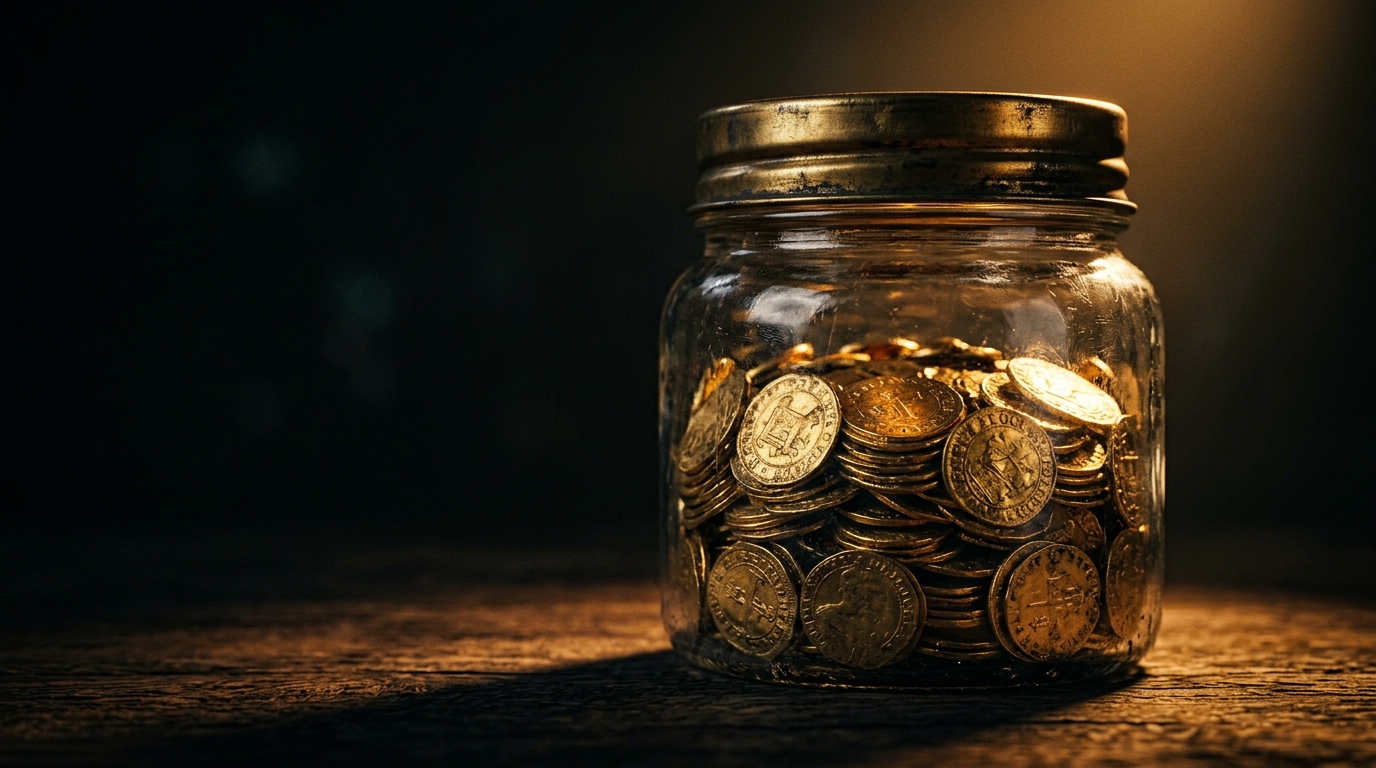
Compound interest is interest on interest. When your investment earns a return and that return is added to the principal, the next period's return is calculated on the larger base. The effect is exponential, not linear.
The math is simple, and the implications are profound. Starting early produces better results than contributing more money later.
The Compound Interest Formula
A = P(1 + r/n)^(nt)
Where:
- A = final amount
- P = principal (initial investment)
- r = annual interest rate (decimal)
- n = compounding frequency per year
- t = time in years
Example: $10,000 at 7% compounded annually for 30 years:
A = 10,000 × (1 + 0.07)^30 = 10,000 × 7.612 = $76,120
On $10,000 invested, compound interest added $66,120. You contributed one dollar in cash for every $6.60 the market contributed.
How Time Amplifies Returns
The same $10,000 at 7% over different periods:
| Years | Final Value | Investment Gain |
|---|---|---|
| 10 | $19,672 | $9,672 |
| 20 | $38,697 | $28,697 |
| 30 | $76,123 | $66,123 |
| 40 | $149,745 | $139,745 |
| 50 | $294,570 | $284,570 |
Going from 40 years to 50 years (25% more time) nearly doubles the outcome. The last decade is the most powerful because the base is largest.
This is the mathematical argument for starting investing at 22 instead of 32. The 10-year head start produces more wealth than doubling contributions later.
The Compounding Frequency Effect
How often interest is added affects the final amount:
$10,000 at 6% for 10 years:
| Compounding | Final Value |
|---|---|
| Annual | $17,908 |
| Quarterly | $18,061 |
| Monthly | $18,194 |
| Daily | $18,220 |
The difference between annual and daily compounding on this example: $312. For longer periods and larger amounts, the gap grows but remains modest compared to the rate and time effects.
For practical investing purposes, whether dividends compound monthly or quarterly matters far less than choosing a better investment.
The Rule of 72
To estimate how long it takes to double your money:
Years to double = 72 / Annual return rate
| Return Rate | Years to Double |
|---|---|
| 2% | 36 years |
| 4% | 18 years |
| 6% | 12 years |
| 7% | 10.3 years |
| 8% | 9 years |
| 10% | 7.2 years |
| 12% | 6 years |
At 7% (a reasonable real equity return), money doubles every 10 years:
- $10,000 at 25 → $20,000 at 35 → $40,000 at 45 → $80,000 at 55 → $160,000 at 65
Starting with $10,000 at 25 produces $160,000 at 65 without adding another dollar. Starting at 35 produces $80,000 at the same 65. The 10-year delay cuts the outcome in half.
Compounding vs. Inflation
Compound interest works against you when borrowing (your debt grows with compound interest) and for you when investing (your assets grow).
Inflation is also compounding. At 3% inflation, purchasing power halves in 24 years. Your investment returns need to outpace inflation to produce real wealth growth.
Real return = Investment return - Inflation rate
7% investment return - 3% inflation = 4% real return
At 4% real return, money doubles in 18 years. More slowly than the nominal 7%, but the doubling represents actual purchasing power growth.
The Monthly Contribution Effect
The compound interest formula above assumes a lump sum. Most investors contribute monthly. With regular contributions, the formula changes to a future value of annuity calculation.
$500/month at 7% annual return:
| Years | Total Contributed | Final Value |
|---|---|---|
| 10 | $60,000 | $87,000 |
| 20 | $120,000 | $260,000 |
| 30 | $180,000 | $606,000 |
| 40 | $240,000 | $1,310,000 |
At year 40: $240,000 contributed, $1,070,000 added by compound returns. The investment return contribution ratio is 4.5:1.
Compound Interest and Debt
Credit card companies use compound interest against you. Most credit cards compound daily.
$5,000 balance at 22% APR, minimum payments:
| Year | Balance Remaining |
|---|---|
| Year 1 | $4,750 |
| Year 3 | $4,200 |
| Year 5 | $3,600 |
| Year 10 | $2,100 |
| Full payoff | ~12 years at minimum |
The compound interest on debt works exactly as powerfully against you as it works for you in investments. A $5,000 credit card balance paid over 12 years at minimums costs $8,100 in total, $3,100 in pure interest.
Frequently Asked Questions
Does compound interest work in a savings account?
Yes. At 4.75% APY, $20,000 earns $950 in year 1. Year 2 earns interest on $20,950. The compounding on a savings account is modest in dollar terms at current balances but demonstrably better than a non-compounding account.
What is the difference between simple and compound interest?
Simple interest: interest calculated only on the original principal. A $10,000 loan at 7% simple interest earns $700/year regardless of balance.
Compound interest: interest calculated on the growing balance. A $10,000 loan at 7% compound interest earns $700 in year 1, $749 in year 2, $802 in year 3 (because the balance grew).
Why don't I feel the compound effect early on?
Because the early years have a small base. Year 1 on $10,000 at 7% = $700. Year 10 at the same rate = $1,300/year. Year 20 = $2,600/year. Year 30 = $5,200/year. The impact accelerates dramatically. Most of the compound growth happens in the last decade, not the first.
These results are estimates provided for informational purposes only. Consult a licensed financial professional before making financial decisions.
You Might Also Like
Put These Numbers to Work
Open a Fidelity brokerage account. $0 commissions, no account minimums, fractional shares available.
Affiliated. We may earn a commission.
Related Guides


Free Tools
Run the actual numbers
Stop estimating. Plug in your numbers and get a precise answer in seconds. Free, no signup required.
Open Free Calculators